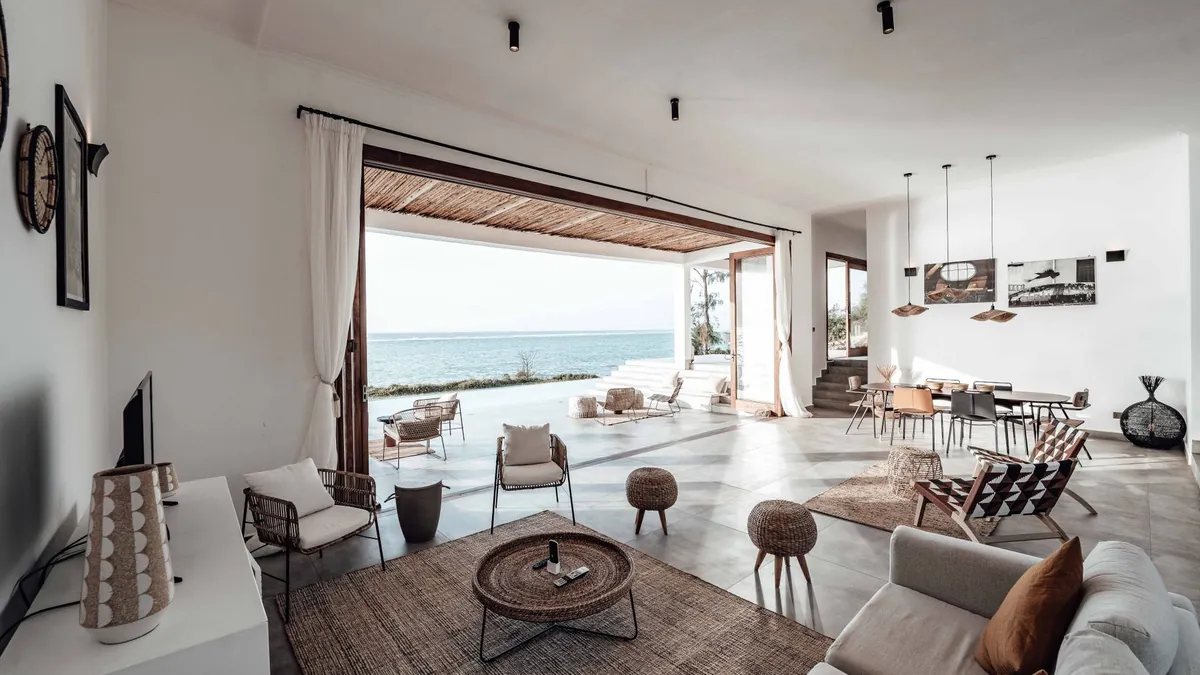
A house a few blocks from the sand lives differently from one in the hills. From Malibu and Pacific Palisades through Santa Monica, Venice and Playa del Rey, down to Manhattan, Hermosa and Redondo Beach, Palos Verdes and Long Beach, LA's beach houses deal with sand tracked in every day, salty air, a damp marine layer and doors that stay open to the patio half the year. Tile is one of the best materials for that life, if you pick the right tile for each spot.
This guide covers the style that suits LA's coastal homes and the practical choices behind it: entry floors that stand up to sand, bathrooms that handle marine-layer moisture, outdoor showers, trim that survives salt air, and indoor-outdoor floors. Patio, pool deck and driveway specifications have their own guide: outdoor tile for LA patios, pool decks and driveways.
The Look: Relaxed, Light and Natural
LA's coastal style is simpler and warmer than the glossy white-and-gray look of a decade ago:
- Sand and stone tones: Warm whites, limestone, light travertine and soft greige that echo the beach instead of fighting it.
- Light wood looks: Pale oak-look porcelain planks give a beach-cottage feel with none of wood's problems with sand, water and wet feet.
- Handmade texture in small doses: Zellige or handmade-look tile on a backsplash, a shower wall or a vanity wall adds depth without busy pattern.
- Ocean color as an accent: Blue-green glass, soft teal or sea-glass tones in a niche, an outdoor shower or a pool waterline.
- Matte finishes: Matte and honed surfaces feel more relaxed and are safer with wet feet than polished tile.
Entries and Main Floors: Built for Sand
Sand is an abrasive. Tracked across a floor day after day, it dulls polished finishes and scratches soft surfaces faster than almost anything else in a home. For entries, mudrooms, hallways and the main living floor:
- Choose through-body or color-body porcelain. The color runs through the tile, so wear does not show a different color underneath.
- Look for a high wear rating. Ask for a tile rated for heavy residential or light commercial traffic.
- Prefer matte or lightly textured surfaces. Scratches and dulling show far less than on polished tile or polished stone.
- Pick mid-tone, speckled or stone-look patterns. They hide sand between cleanings better than solid white or solid dark tile.
- Add a mat zone. A recessed or generous mat at each beach-side door catches most of the sand before it reaches the tile.
Bathrooms and the Marine Layer
Coastal LA stays damp for much of the year, especially during the late-spring and early-summer marine layer. Bathrooms dry more slowly, which is where mildew in grout usually starts. Choices that help:
- Good ventilation first. A properly sized, quiet exhaust fan on a timer or humidity sensor does more for grout than any product.
- Large-format wall tile: Fewer grout lines means less to clean. Our guide to luxury bathroom tile in Los Angeles covers the slab-look options.
- Stain- and mildew-resistant grout: Epoxy or high-performance grout holds up better in damp coastal bathrooms. See sanded vs. unsanded grout for the basics.
- Sealed natural stone: Marble, limestone and travertine all work near the beach when they are sealed and resealed on schedule.
Outdoor Showers
Outdoor showers are a beach-city favorite for rinsing off sand and wetsuits before coming inside. Tile them like a wet area that also sits outdoors:
- Slip resistance: Choose tile the manufacturer rates for exterior wet use under the ANSI A326.3 slip-resistance standard. Small mosaics and pebble tile add grip through the extra grout joints.
- Drainage: Slope the floor properly to a drain sized for sand. A removable grate makes cleanouts easy.
- Waterproofing: A waterproof membrane behind wall tile protects the house wall, just as in an indoor shower.
- Materials: Porcelain, glass mosaic and sealed stone all work. Skip unsealed cement tile and soft glazes.
Salt Air and Metal Trim
Salt air is the quiet enemy of coastal tile work. Standard metal edge trims, drains, fasteners and fixtures can corrode, and rust stains are very difficult to remove from grout, stone and porous tile. Near the water:
- Specify marine-grade 316 stainless, anodized aluminum rated for exterior use, or non-metal trim for exterior tile and outdoor showers.
- Rinse outdoor tile and fixtures with fresh water now and then to wash off salt.
- Reseal natural stone outdoors more often than you would inland.
Indoor-Outdoor Floors
Many coastal remodels open the living room straight onto a deck or patio with large sliding or folding doors. Using the same tile inside and out makes the space feel bigger. Most porcelain collections now offer a standard indoor tile plus a matching thicker outdoor paver with a grippier surface, so the look carries through while each side gets the right performance. Plan the threshold, drainage and door sill details early, because a flush transition needs the exterior slab set lower and sloped away from the house.
Budgeting
Coastal projects follow the same pricing as the rest of Los Angeles, with extra care for trim, drainage and outdoor details. For current ranges, see our Los Angeles tile installation cost guide.
Summary
The best beach-house tile in Los Angeles looks relaxed and natural but is chosen with sand, salt and moisture in mind: tough matte porcelain at the entries, large-format tile and good ventilation in the bathrooms, properly drained outdoor showers, marine-grade trim, and matching indoor-outdoor floors that make the most of the coast. When you are ready to plan a project, contact Tile Los Angeles.