Los Angeles grew up fast in the 1920s, and much of what it built in that decade was Spanish Colonial Revival: white stucco walls, red clay roof tile, arched doorways, wrought iron and shaded courtyards. Walk through Los Feliz, Silver Lake, Hancock Park, Windsor Square, Beverly Hills, Pasadena or Palos Verdes Estates and you still see it on block after block. In these houses, Spanish Revival and Mediterranean tile is not a theme. It is the original material language of the building.
This guide covers that vocabulary (terracotta, hand-painted talavera, encaustic cement tile and Mediterranean pool tile), how to use it in an LA remodel without it looking like a stage set, and the practical points that matter here: original tile worth saving, design review in historic districts, and coastal and seismic details.
Los Angeles Has Its Own Tile History
Southern California did not just import Spanish-style tile, it made it. A few names still turn up in LA homes and are worth knowing before you remodel:
- Malibu Potteries: Operated in Malibu from 1926 into the early 1930s and produced richly glazed decorative tile in Moorish and Spanish-inspired patterns. The Adamson House in Malibu, now part of a state park, is the best-known showcase of its work.
- Catalina tile: Made on Catalina Island in the late 1920s and 1930s, known for bright glazes and pictorial panels. Pieces appear in Avalon and in homes across the LA area.
- Batchelder tile: Ernest Batchelder's Arts and Crafts tiles, first made in Pasadena, show up in fireplaces and fountains in older LA houses, including many Spanish Revival homes.
If your house has original tile from any of these makers, treat it as an asset. Historic tile can often be cleaned, regrouted and repaired, and matching reproductions are made today for missing pieces.
The Spanish Revival Tile Vocabulary
Terracotta: The Foundation Material
Fired clay tile in warm red-orange tones is the defining floor of Mediterranean architecture. Its variation in color, texture and size comes from the clay and the handwork, and that warmth is very hard to reproduce in porcelain.
Saltillo Tile
Saltillo, a handmade terracotta from Saltillo, Mexico, is the most accessible terracotta for LA homes and fits the Spanish Revival style naturally.
- Interior floors: Performs well in LA's mild climate. It is porous, so it needs a penetrating sealer plus a protective topcoat, especially in kitchens and baths.
- Covered patios and loggias: A good fit when sealed and protected from standing water.
- Exposed outdoor areas: Not the best choice. Saltillo absorbs a lot of water, so a porcelain terracotta-look paver or a dense-fired paver is more durable where rain and sprinklers hit it directly.
- Installation: Sizes vary tile to tile, so it needs an installer comfortable with wider joints and a flatter, carefully prepared substrate.
European Terracotta
French, Italian (cotto) and Spanish terracotta is fired harder and is more consistent in size than Saltillo, which makes large rooms easier to install. It costs more, but it is a common choice in higher-end restorations where authenticity matters. Hexagon and rectangular formats both suit 1920s interiors.
Hand-Painted Talavera Tile
Talavera, the hand-painted tin-glazed earthenware from Puebla, Mexico, and its Spanish relatives bring the cobalt, yellow, orange and white patterns most people picture when they think of Spanish Revival interiors. Where it works best:
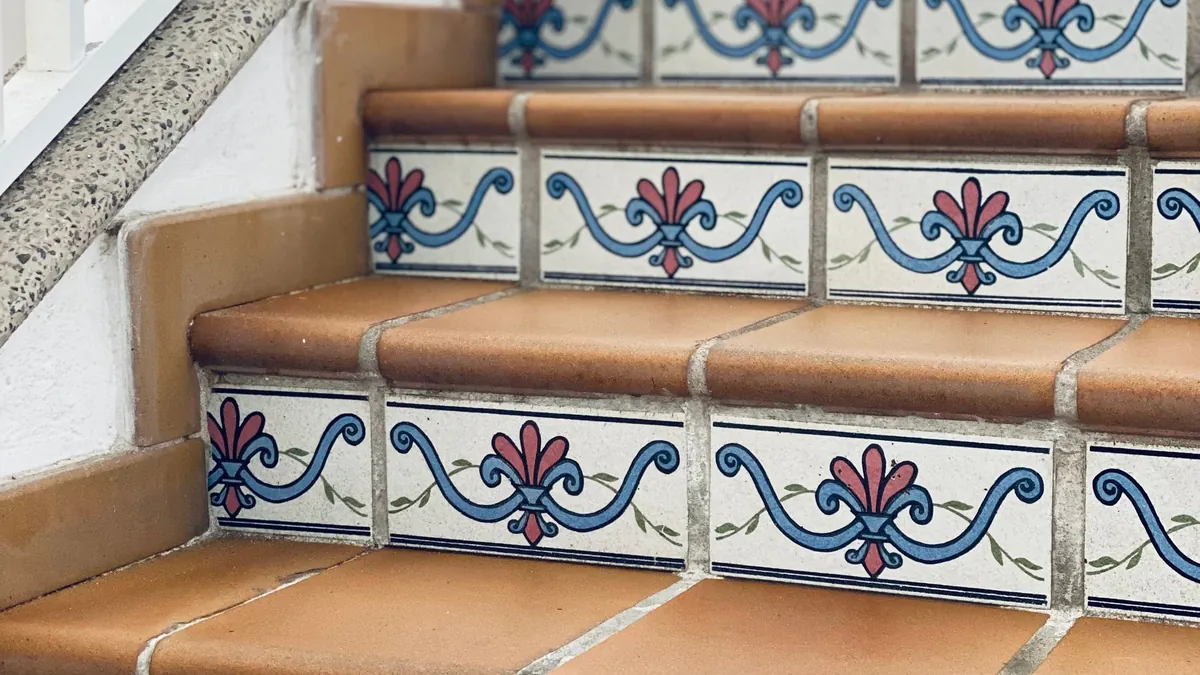
- Stair risers: The classic LA application. Terracotta treads with painted tile risers are a signature of Spanish Revival staircases, indoors and out.
- Kitchen backsplashes in hacienda-style kitchens, often in 4x4 or 6x6 formats with a mix of patterns.
- Fountains, niches and outdoor kitchen backsplashes.
- Accent bands and feature walls in secondary baths.
Talavera's glaze is soft, so keep it off floors and other surfaces that take heavy wear.
Encaustic Cement Tile
Encaustic cement tile is pressed rather than fired, with the pattern made from colored cement layers. Its geometric and floral designs trace back to Spanish and Moorish traditions and look right at home in LA's Spanish Revival kitchens, baths and entries.
- Best uses: Interior floors and walls, backsplashes and covered outdoor areas.
- Care: Cement tile is porous. Seal it at installation and reseal on the schedule the manufacturer recommends.
- Not for: Exposed wet outdoor areas, where water wears the surface over time. A cement-look porcelain gives the same pattern with far less maintenance there.
Key fact: Many of LA's Spanish Revival neighborhoods sit inside a Historic Preservation Overlay Zone (HPOZ), and some cities in the region have their own historic districts. Pasadena is one example. Palos Verdes Estates also has an Art Jury that reviews exterior changes. If your home is in one of these areas, visible exterior tile such as front steps, entry paving or driveway tile may need design review. Traditional materials like terracotta are usually easier to approve. Check with your city's planning or historic resources office before you order exterior tile.
Restoring Original Tile vs. Starting Over
A lot of 1920s and 1930s LA homes still have original tile in bathrooms, kitchens and around fireplaces. Before you demolish it:
- Assess what is there. Cracked or stained historic tile can often be cleaned, regrouted and repaired. Our stone restoration guide covers what a professional can bring back.
- Salvage for repairs. If part of a room must go, save intact tiles to patch other areas.
- Test before removal. Old adhesives, mastics and some vintage flooring can contain asbestos. Have suspect materials tested before anyone starts grinding or chipping.
Courtyards, Patios and Pools
Spanish Revival homes are built around outdoor rooms, so courtyard and patio paving matter as much as interior floors:
- Dense-fired terracotta pavers: Traditional and beautiful on well-drained, covered or partly covered patios.
- Terracotta-look or stone-look porcelain pavers: The practical choice for fully exposed areas, pool decks and anywhere that gets regular water.
- Travertine and limestone: Suit the Mediterranean look; they need sealing and regular care.
- Pool waterlines: Cobalt or deep blue glass mosaic and blue-and-white patterned porcelain are the classic Spanish Revival pool details.
For slip resistance, drainage and pool deck specifications, see our guide to outdoor tile for LA patios, pool decks and driveways.
Pro tip: For Spanish Revival homes near the ocean, such as in Palos Verdes Estates or Malibu, specify marine-grade (316) stainless or non-metal trim and fittings for exterior tile. Salt air corrodes standard metal trim, and rust stains are very hard to remove from porous terracotta and cement tile.
Keeping It Authentic in a Modern Remodel
- Stay with the house's era. Terracotta floors, painted accents and simple white field tile read as original. High-gloss large-format tile usually does not.
- Use pattern where the originals would have. Stair risers, fountains, niches, backsplashes and bath accents, not every wall.
- Match grout to the material. Warm, sanded grout suits terracotta and handmade tile. Our guide to sanded vs. unsanded grout explains the difference.
- Mix authentic and practical. Real terracotta and talavera inside; porcelain lookalikes where water, sun and traffic are hardest on the tile.
Where to See Materials in Los Angeles
LA has a deep bench of tile showrooms and importers. Large showrooms such as Walker Zanger, Ann Sacks and Bedrosians carry terracotta, stone and handmade lines, and many smaller importers specialize in Mexican talavera, Saltillo and cement tile. Ask to see full-size samples in your own light before you commit, because handmade tile varies from batch to batch.
Summary
Spanish Revival tile looks best in Los Angeles when it respects what the house already is: terracotta underfoot, talavera where it adds character, cement tile patterns used with restraint, and original historic tile saved wherever it can be. Pair those materials with the right technical choices outdoors and near the coast, and the result feels like it has always been part of the home. For budgets, see our Los Angeles tile installation cost guide, and when you are ready to plan a project, contact Tile Los Angeles.