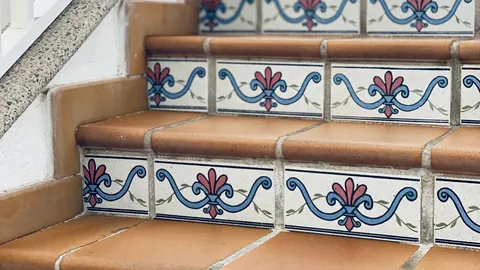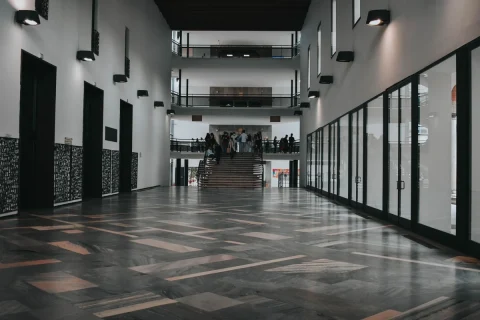
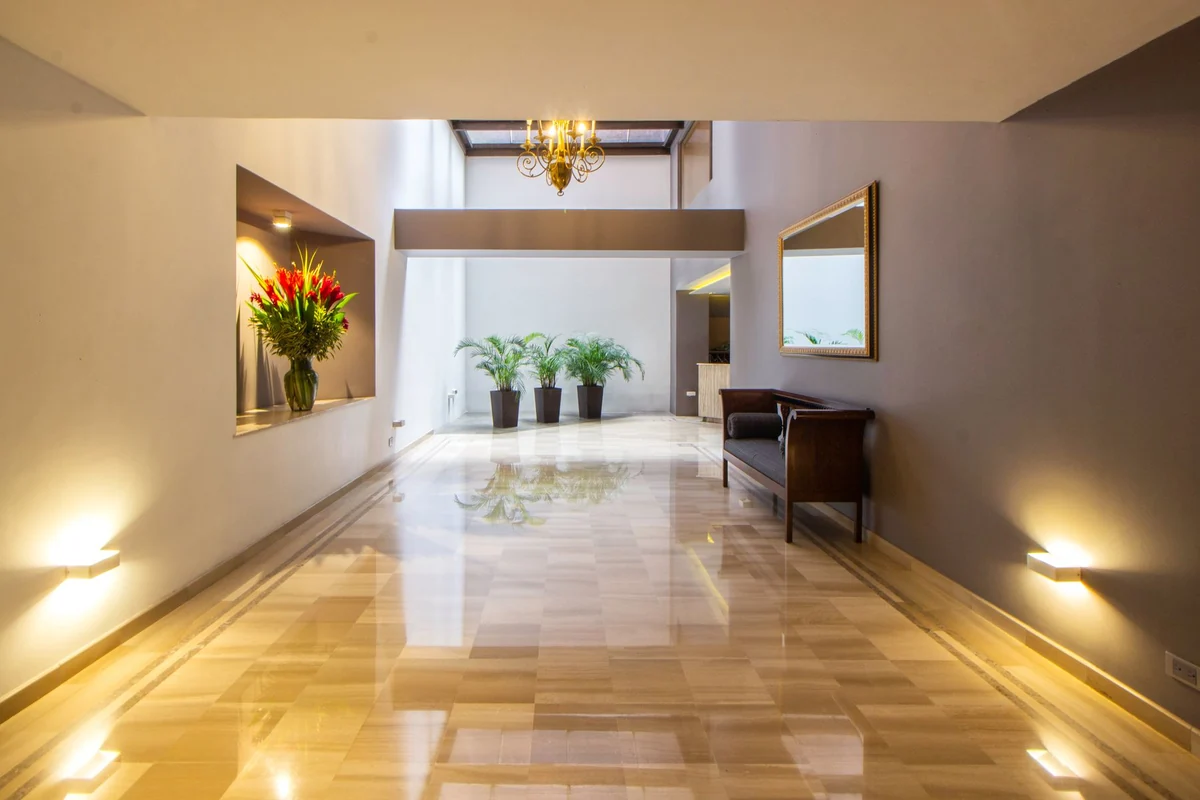
Los Angeles has one of the highest concentrations of natural stone flooring in the United States. Decades of upscale residential construction across Bel Air, Beverly Hills, Pacific Palisades, Hancock Park, and the Hollywood Hills have left thousands of homes with marble, travertine, limestone, and slate floors that range from pristine to severely worn. When natural stone loses its finish - whether through everyday traffic, improper cleaning, chemical etching, or simply the passage of time - the solution is professional stone restoration, not replacement.
Understanding what stone restoration involves, when it is the right solution, and what to expect from a qualified LA contractor is the first step toward bringing your stone back to its original beauty.
Types of Natural Stone in Los Angeles Homes
The stone restoration approach depends entirely on what type of stone you have. The most common stones in Los Angeles residential properties include:
Marble is the most commonly restored stone in LA. White Carrara, Calacatta, Statuario, and Emperador marble floors are found throughout the luxury residential market. Marble is a crystalline metamorphic stone that can be ground and repolished to a mirror finish, making it uniquely restorable. However, marble is calcium-based and highly vulnerable to etching - chemical reactions with acidic substances (citrus juice, wine, vinegar, many cleaning products) that dull the polished surface. Most marble restoration work in LA involves addressing etch damage alongside mechanical scratches and general dullness.
Travertine is the second most common restoration subject in LA homes. Its characteristic pore structure - filled with grout or resin at the factory - tends to open up over time as fill material degrades, creating an increasingly rough surface that traps dirt. Travertine restoration typically involves filling open pores, grinding to level uneven tiles, and polishing or honing to the desired finish.
Limestone behaves similarly to marble (both are calcium carbonates) but is softer and more porous. Limestone in LA foyers and hallways shows wear and etch damage faster than marble and may require more frequent maintenance cycles.
Slate is found in many mid-century LA homes, particularly in entryways, patios, and pool surrounds. Unlike marble and travertine, slate does not polish to a high gloss - restoration typically involves deep cleaning, crack repair, and application of a penetrating sealer or color enhancer.
Key fact: The Natural Stone Institute estimates that professional stone restoration - grinding, honing, and polishing an existing marble floor - costs 30-50% of the cost of full tile replacement, while delivering a finish that is indistinguishable from new stone.
The Stone Restoration Process: What Actually Happens
Professional stone restoration is a multi-stage diamond-abrasive process, not a cleaning service. Here is what each stage involves:
Stage 1: Assessment and Diagnosis
A qualified stone restoration professional begins with a thorough assessment of the stone's condition: identifying lippage (uneven tiles), cracks, chips, etch damage, staining, grout condition, and sealer status. This assessment determines which restoration approach is appropriate - light honing and polish for mildly worn stone, or full grinding and restoration for heavily damaged floors.
Stage 2: Grinding (if needed)
For floors with significant lippage, deep scratches, or severe etch damage, diamond grinding is the first step. Heavy-grit diamond tooling (typically 30-50 grit) is used to flatten uneven tiles and remove the deepest surface damage. This generates significant slurry (a mix of water and stone dust) and requires containment and cleanup. Grinding is not always necessary - many LA marble floors can be restored with honing alone.
Stage 3: Honing
Honing uses progressively finer diamond abrasive pads (typically 100, 200, 400, 800 grit) to refine the surface left by grinding, or to address moderate wear and scratches without grinding. A honed finish is a flat, non-reflective matte surface - increasingly popular in contemporary LA home design as a practical alternative to high-polish marble that shows every footprint and etch mark.
Stage 4: Polishing
For homeowners who want the traditional high-gloss marble finish, polishing follows honing using fine diamond pads (1500-3000 grit) and crystallization or burnishing compounds. True mechanical polishing produces a reflective mirror finish by refining the surface to a level where light reflects specularly rather than diffusely. This is distinct from coating-based products (like wax or coating sealers) that simulate gloss without actually polishing the stone.
Stage 5: Crack and Chip Repair
Cracks, chips, and holes are filled with color-matched epoxy or polyester filler before final polishing. In travertine, the open pores are filled with grout or specific travertine filler compounds. Professional repair of hairline cracks is often nearly invisible in the finished restoration.
Stage 6: Sealing
After polishing, a penetrating impregnator sealer is applied to protect the stone from staining. Quality sealers penetrate the stone surface and repel moisture and oil without altering the appearance or finish. Common professional-grade sealers used by LA contractors include Tenax Proseal, Akemi, and Stonetech Professional. For marble floors with a polished finish, expect to reseal every 12-24 months with regular use.
Pro tip: Never use vinegar, citrus-based cleaners, bleach, or generic all-purpose cleaners on natural stone floors. These products cause irreversible chemical etching that requires professional re-polishing to address. In Los Angeles marble homes, instruct housekeeping staff and cleaning services specifically about approved stone cleaners (pH-neutral only) before any cleaning service begins.
Etch Damage: The Most Common Marble Problem in LA Homes
Etch marks are the most common complaint from Los Angeles marble floor and countertop owners. They appear as dull, lighter spots on the surface - often with a ring shape from a wine glass, a splash pattern near the kitchen sink, or diffuse dulling in high-use areas. Etching is a chemical reaction, not a physical scratch, and it cannot be removed with cleaning products.
Light etching on a polished marble floor can often be addressed with a buffing compound (marble polishing powder) applied by hand or low-speed polisher - a DIY-accessible repair for minor isolated etch spots. Widespread or deep etching requires professional honing and re-polishing. On a typical Los Angeles master bath or foyer marble floor, professional etch repair costs $3-8 per square foot, depending on the severity and scope.
Travertine Restoration: Filling, Leveling, and Refinishing
Travertine floors in LA homes - particularly in the transitional and Mediterranean-style homes common in Hancock Park, Encino, and Tarzana - often show a combination of problems after 15-20 years: open pores (the original filler has degraded), lippage from differential settling, grout erosion, and surface scratches.
Professional travertine restoration typically runs $4-9 per square foot in the Los Angeles market and includes lippage grinding, pore filling (with non-shrink grout or color-matched epoxy), progressive honing through multiple diamond grits, and sealing. The result should look very close to original installation quality. Travertine can be restored to either a honed (matte) or polished finish - honed is more practical and is the more popular choice in current LA design.
Outdoor Stone Restoration in Los Angeles
Many Los Angeles properties feature travertine pool decks, limestone patios, and marble entry walks that present additional restoration challenges. Outdoor stone is subject to UV exposure, freeze-thaw cycling in higher-elevation properties, algae and moss growth, and the specific chemical environment of pool water (chlorine and pH fluctuations).
For outdoor LA stone surfaces:
- Algae and biological growth must be treated with an appropriate biocide before any restoration work - attempting to grind or polish algae-contaminated stone drives organic material deeper into the pores
- Outdoor stone should not be polished to a high gloss - a honed or brushed finish provides better slip resistance (critical for pool decks under wet conditions, minimum DCOF 0.42 per ANSI A137.1)
- Pool deck travertine should be sealed with a penetrating sealer rated for pool chemical environments (chlorine-resistant) and resealed annually
- Crack repair on outdoor stone must use flexible epoxy rated for exterior use and temperature cycling - interior epoxy formulas will fail from thermal expansion and contraction
Stone Restoration Costs in Los Angeles - 2026
Los Angeles stone restoration pricing reflects the region's premium labor market:
- Marble honing and polishing (light restoration): $3-6 per square foot
- Marble full grinding and restoration: $6-12 per square foot
- Travertine restoration (fill, hone, seal): $4-9 per square foot
- Etch repair (spot treatment, small areas): $200-600 flat rate for most residential jobs
- Crack and chip repair: $50-200 per repair depending on complexity
- Sealing only (penetrating impregnator): $1-2 per square foot, $300-800 minimum
For an average 400-square-foot Los Angeles master suite marble floor requiring full hone and polish restoration, expect a total cost of $1,500-3,500 depending on condition and finish level.
Choosing a Stone Restoration Contractor in Los Angeles
Stone restoration is a specialized skill distinct from tile installation. When selecting a contractor in LA, look for:
- Membership in the Natural Stone Institute (NSI) and/or Building Stone Institute (BSI)
- Specific experience with the stone type in your home - marble, travertine, and limestone each require somewhat different tooling and chemistry
- A test area - any reputable stone restoration contractor should offer to demonstrate the intended process and result on a small inconspicuous area before committing to the full floor
- References from comparable Los Angeles residential projects
- Written scope including the specific diamond grit sequence, filler products, sealer products, and expected finish level
Natural stone is one of the few flooring materials that can be fully restored to like-new condition - sometimes multiple times over the life of a building. In Los Angeles, where beautiful stone floors represent real investment value, professional restoration is almost always the smarter choice over replacement. Done right, a restored marble or travertine floor looks better than the day it was installed and will continue to do so for another generation.