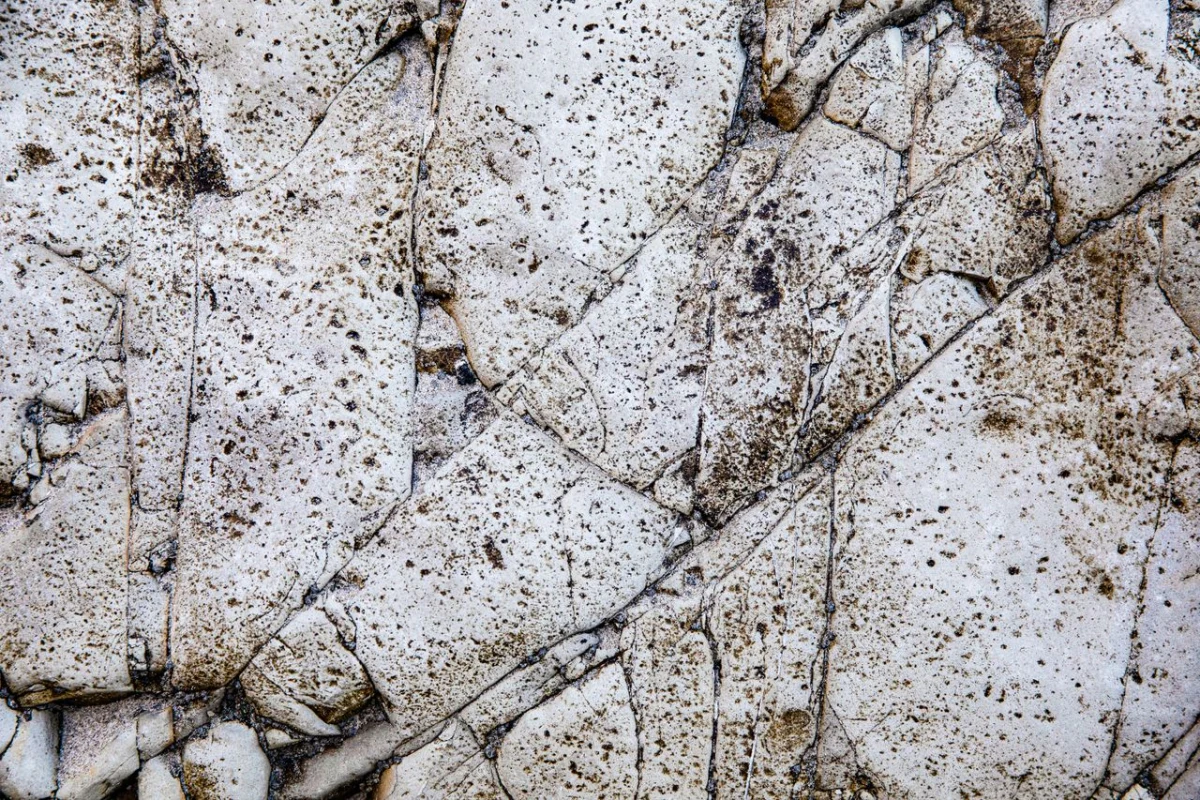
The Best of Both Worlds
Quartzite occupies a unique position in the natural stone world: it offers the flowing, marble-like beauty that homeowners love, combined with a hardness and durability that rivals, and often exceeds, granite. For those who want the look of marble but need the toughness of granite, quartzite is the answer.
Quartzite is a metamorphic rock formed when sandstone is subjected to extreme heat and pressure. The quartz grains in the original sandstone recrystallize and fuse together, creating one of the hardest natural stones available, rating 7 on the Mohs hardness scale.
Quartzite vs Quartz: An Important Distinction
This causes frequent confusion:
- Quartzite is a natural stone quarried from the earth. Each piece is unique.
- Quartz (like Caesarstone or Silestone) is an engineered material made from ground quartz crystals bound with resin. It's manufactured, not natural.
They're completely different products despite the similar names.
Characteristics
Appearance
Quartzite features flowing, organic patterns reminiscent of marble but with its own distinct character. The visual effect can range from subtle and uniform to dramatically veined:
- White/Gray: Taj Mahal, White Macaubas. Elegant and refined
- Blue/Green: Azul Macaubas, Emerald. Rare and striking
- Gold/Warm: Fusion, Golden. Warm and distinctive
- Pink/Rose: Rosa. Soft and unexpected
Hardness and Durability
- Mohs 7: Harder than granite (6-7), significantly harder than marble (3-5)
- Highly resistant to scratching, even from sand and grit
- Excellent resistance to chipping and cracking
- Can handle heavy foot traffic without showing wear
Density
True quartzite has very low water absorption, often comparable to granite. This makes many quartzite varieties suitable for outdoor use.
Best Applications
High-Traffic Floors
Quartzite's exceptional hardness makes it the premium choice for floors that need to handle heavy foot traffic while maintaining natural stone beauty. It outperforms marble and travertine in wear resistance.
Kitchen Applications
Both as tile flooring and countertop material, quartzite stands up to the demands of busy kitchens better than most natural stones. It's more resistant to scratching, staining, and etching than marble or limestone.
Outdoor Spaces
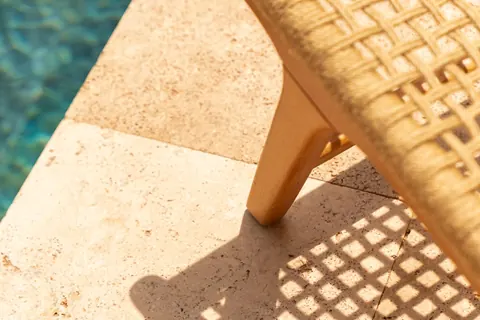
Dense quartzite varieties with low absorption rates work well for outdoor patios, pool decks, and walkways in Southern California's mild climate.
Bathroom Floors and Walls
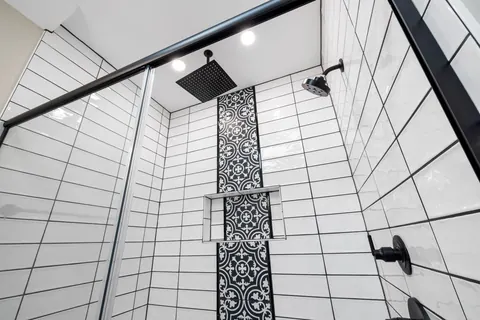
Quartzite creates stunning bathrooms with the visual impact of marble but better long-term durability. It resists etching from bath products better than pure marble.
Commercial Spaces
Hotels, restaurants, and retail spaces that want natural stone beauty with practical durability increasingly specify quartzite.
Maintenance
Sealing
While quartzite is denser than marble or limestone, most varieties still benefit from periodic sealing. Apply an impregnating sealer every 1-3 years, depending on the specific variety and usage.
Cleaning
- Dust mop or vacuum regularly
- Clean with pH-neutral stone cleaners
- Quartzite is more resistant to acids than marble, but it's still wise to clean acidic spills promptly
Acid Resistance
This is where quartzite and marble differ significantly. True quartzite (composed primarily of recrystallized quartz) is much more acid-resistant than marble. However, some stones sold as "quartzite" actually contain significant calcite and will etch like marble. Testing with a small drop of lemon juice in an inconspicuous area can verify acid resistance.
A Note on Misidentification
The natural stone market has a known issue with quartzite misidentification. Some stones labeled as quartzite are actually marble, dolomite, or calcite-rich stones that don't share quartzite's hardness or acid resistance. To verify you're getting true quartzite:
- Request a scratch test (quartzite won't scratch easily with a knife)
- Perform an acid test (lemon juice won't etch true quartzite)
- Ask for geological testing documentation from the supplier
Cost Guide
- Standard quartzite tile: $8–$20/sq ft
- Premium or exotic quartzite: $20–$40+/sq ft
- Installation: $10–$20/sq ft in Los Angeles
- Total installed cost: $18–$60/sq ft depending on variety
Quartzite is generally more expensive than granite or marble, reflecting its relative rarity and superior properties.
Quartzite vs Other Natural Stones
- Quartzite vs Marble: Quartzite is much harder, more scratch-resistant, and more acid-resistant. Marble has a more luminous, translucent quality.
- Quartzite vs Granite: Similar hardness, but quartzite offers flowing veined patterns vs granite's crystalline speckle.
- Quartzite vs Porcelain: Porcelain is more affordable and zero-maintenance; quartzite offers authentic natural stone depth and uniqueness.
Quartzite in Southern California
Quartzite is gaining popularity in Los Angeles high-end residential projects. It appears in:
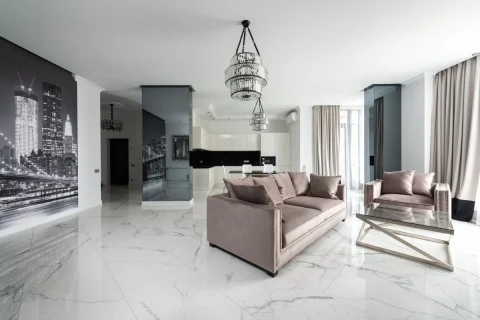
- Modern and contemporary homes seeking the marble look with better performance
- High-end kitchen countertops and flooring
- Luxury bathroom installations
- Commercial hospitality projects
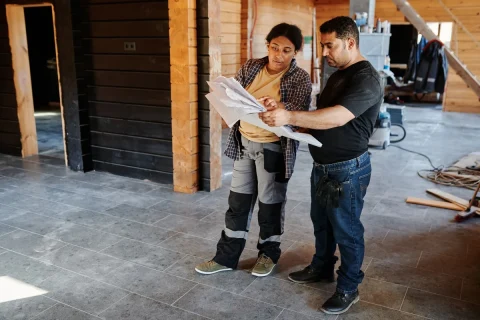
At Tile Los Angeles, we work with quartzite regularly and understand its unique installation requirements. The stone's hardness demands specialized cutting tools and techniques that differ from softer natural stones.
The Bottom Line
Quartzite is the premium natural stone choice for those who refuse to compromise between beauty and durability. It delivers marble-like aesthetics with granite-like toughness: the best of both worlds.
The investment is higher than most alternatives, but quartzite rewards with decades of beautiful, resilient performance. Contact Tile Los Angeles for expert quartzite installation across Los Angeles.